Collaboration in software development teams
Improve the way your team works together. In this training, you’ll learn how to communicate more effectively, avoid misunderstandings, and increase your influence – so technical quality and team dynamics go hand in hand.
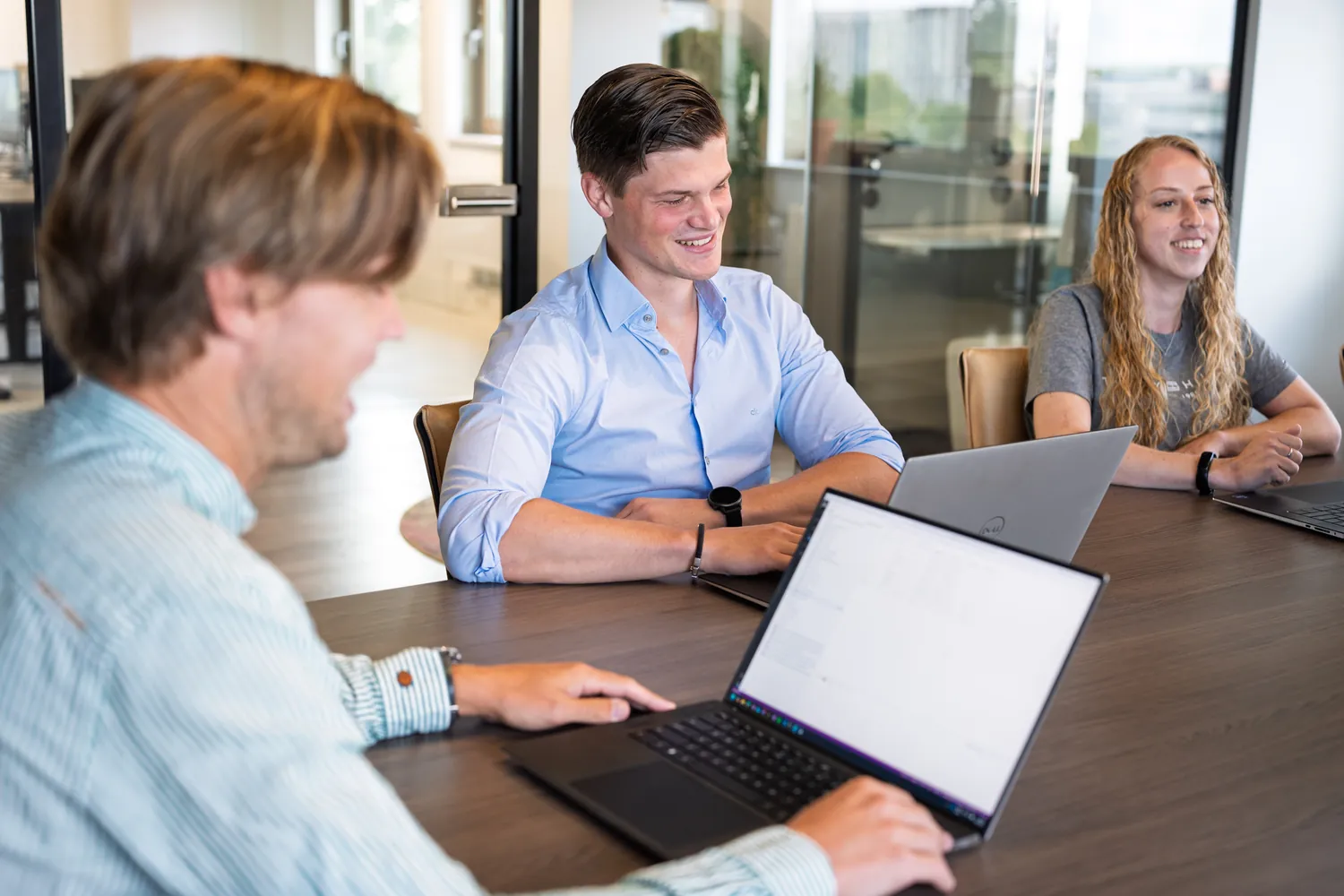
From great code to great teamwork
Strong software comes from strong teams. But strong teams and good collaboration don’t happen automatically. In software development, it’s not just about code; it’s also about communication, feedback, responsibility, and trust. Small misunderstandings can have a big impact on planning, quality, and job satisfaction.
In this training, you’ll learn how to collaborate more effectively, give and receive feedback, communicate assertively, and strengthen each other. You’ll work with familiar, real-world scenarios, from giving feedback in code reviews to handling resistance in sprint planning. We combine theory with exercises, reflection, and lots of interaction, so you can apply what you learn immediately in your daily work.
🕐 Duration: 1 day (two half-day sessions, ideally one week apart, including practical assignments)
👥 Target audience: Software development teams — developers, testers, architects, analysts, and tech leads
What you’ll learn
This training focuses on communication, collaboration, and personal effectiveness in software development. It consists of interactive modules with short theory segments, demonstrations, group work, and reflection, always based on realistic, everyday team situations. Content is adjustable based on experience and learning needs.
- Why communication matters
- Discover the cost of miscommunication – in time, frustration, and quality
- Recognize how small interpretation gaps can have big consequences
- Experience this firsthand in a short group exercise
- What makes a team effective
- What does collaboration really mean, and what are the key conditions?
- Trust, respect, communication, and clear expectations as a foundation
- Analyze your team’s strengths and weaknesses, and discuss improvements
- Communication in software development teams
- What does good communication look like, and what often goes wrong?
- Active listening: Listen, Summarize, Ask (LSA)
- Tailoring your message to the recipient
- Exercises and demos based on common team scenarios
- Giving and receiving feedback
- Why feedback is crucial for learning and collaboration
- Giving feedback using the Situation–Behavior–Impact model
- Receiving feedback without becoming defensive or dismissive
- Applying feedback in code reviews and retrospectives
- Exercises based on realistic examples
- Assertiveness: Saying no without conflict
- Why saying “no” is difficult, and why it’s necessary
- How to set boundaries with stakeholders, colleagues, or yourself
- Pair exercises: saying no without harming the relationship
- Dealing with resistance and disagreements
- Recognize where resistance comes from (conflict causes, assertiveness vs aggression)
- Turning resistance into cooperation (Leary’s Rose)
- Role-playing real-life scenarios, disagreements over architecture, or responding to unrealistic deadlines
- Proactivity in teams
- What does being proactive mean in a development context?
- When does taking initiative add value, and when doesn’t it?
- Awareness, mindset, and context-based exercises
- Communication as the key for constructive action
- Effective meetings
- Why meetings often frustrate, and how to prevent that
- The importance of agendas and clear objectives
- The role of the facilitator
- The “Umbrella Method” as a guide for vague or shifting discussions
- Summary and closing
- Reflecting on key takeaways
- Personal action points: what will you change in your collaboration?
Working better together to build better software
After this training, your team will understand each other better, communicate more clearly, and collaborate with more confidence. You’ll learn how to avoid misunderstandings, use feedback constructively, and meet more effectively – building the foundation for stronger teamwork, greater job satisfaction, and lasting software quality.
Interested? We will contact you shortly.
Interested? Talk to Esther about it!
